

Double materiality: turn compliance into strategic advantage
Understand double materiality and its impact on ESG strategy, reporting, and business performance.
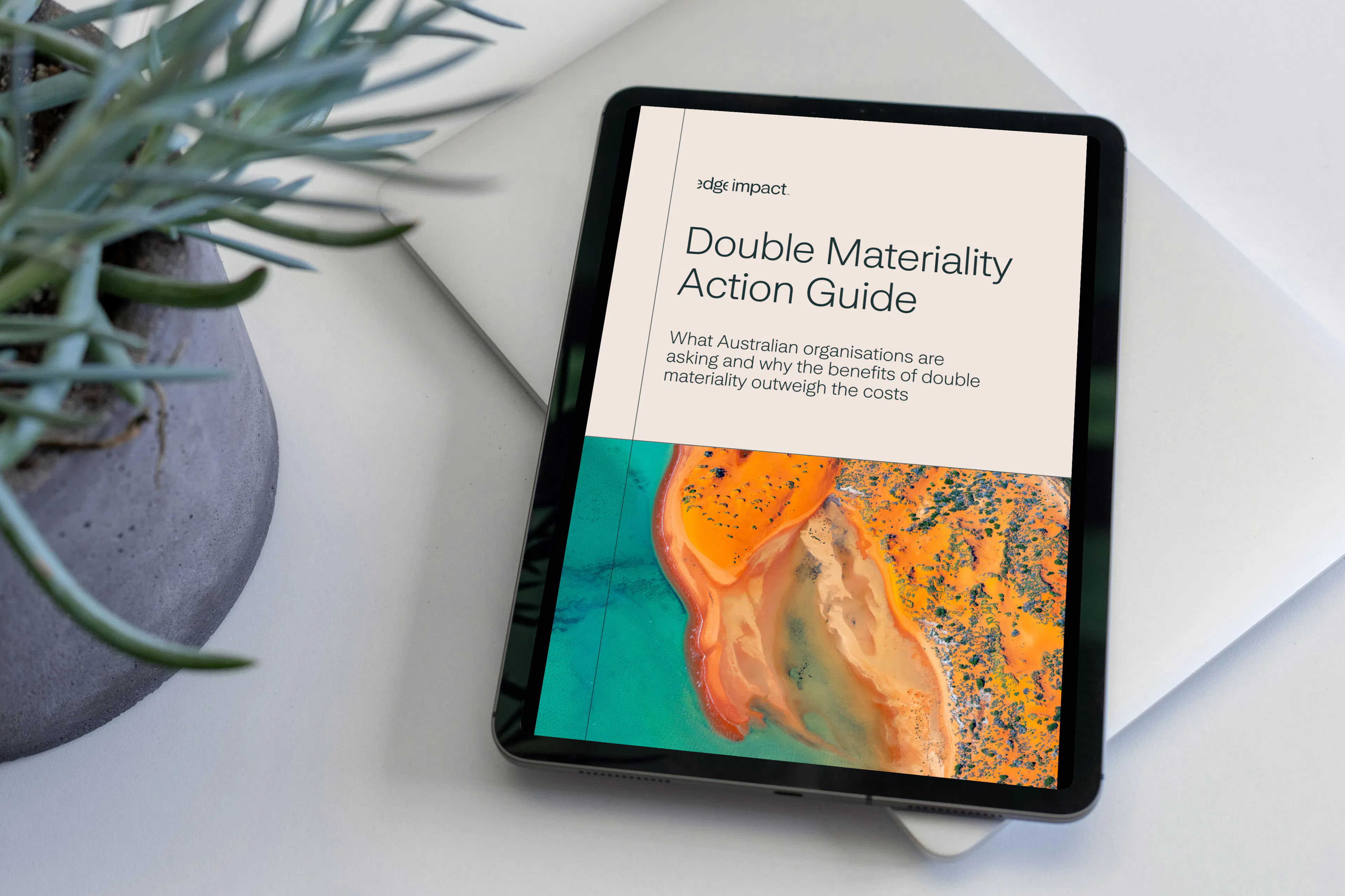
Our Double Materiality Action Guide shares exclusive insights from real organisations and practical steps to turn assessment into action.

Double materiality in practice
Understanding double materiality is one thing, applying it to your organisation is another. That’s why we created the Double Materiality Action Guide.
This practical, easy-to-digest resource provides the answers to our clients’ most frequently asked questions and shows exactly how to turn insights into impact.
Key features of the guide:
- Practical guidance: Clear, actionable steps to embed double materiality into strategy, reporting and operations
- Cost clarity: Understand the factors driving costs and how to make the process efficient and valuable
- Insider insights: Lessons from real organisations, what works, what to watch out for and common pitfalls to avoid
- Prioritisation advice: Focus on the ESG issues that actually deliver business value, rather than doing everything at once
- Immediate next steps: Concrete next steps your team can implement immediately without needing a full consultancy engagement
Download the Action Guide
Edge expertise in translating double materiality into action
We’ve guided a wide range of organisations through the practical application of double materiality, from ASX-listed companies to government agencies.
Our clients benefit from:
- Actionable frameworks: Materiality assessments that translate directly into strategic, operational and reporting decisions
- Direct prioritisation: Focus on the ESG issues that matter most to your business and stakeholders
- Efficiency and cost clarity: Streamline the process without compromising value or credibility
- Deep expertise: Our team brings 18+ years of cross-industry experience in sustainability strategy, reporting, decarbonisation, procurement and communications
- From materiality to impact: Ensure insights inform strategy, operations and reporting, driving tangible change across your organisation
Edge insight: Materiality assessments guided by Edge don’t just inform reporting. They directly shape strategic and operational decisions, helping teams prioritise the ESG issues that deliver the most value for the business and its stakeholders.

The strategic importance of double materiality
Double materiality gives organisations a complete view of ESG by combining impact and financial perspectives:
1. Impact Materiality: Assessing your organisation’s environmental and social footprint
Impact materiality evaluates how your organisation’s operations affect people, communities and the environment. By understanding your external impact, you can focus on your internal actions that create meaningful change, manage reputational risk, and meet stakeholder expectations.
2. Financial Materiality: Understanding risks and opportunities
Financial materiality identifies ESG-related risks and opportunities that could materially influence your organisation’s financial performance, future cash flows and long-term resilience. It ensures your ESG decisions align with both corporate strategy and investor expectations.
When applied effectively, double materiality allows organisations to:
- Anticipate and manage ESG-related risks before they escalate
- Align sustainability initiatives with business strategy and competitive advantage
- Enhance stakeholder confidence through transparent, credible reporting
- Deliver actionable insights for both strategy and operations
- Take advantage of emerging ESG-related opportunities
Edge insight: Our work shows that double materiality is most effective when embedded into decision-making at every level. Teams that use it to guide both operational and strategic choices report higher confidence in ESG priorities and more consistent progress toward goals.

Double materiality in the Australian context
Australia’s sustainability reporting landscape is shifting quickly, with mandatory climate-related disclosures now in place under ASRS and alignment to ISSB standards.
In this context, double materiality is becoming increasingly relevant for Australian organisations because it helps:
- Strengthen decision-making beyond compliance: Applying a broader double materiality lens helps organisations understand how ESG impacts across the value chain translate into financial risk, opportunity and long-term resilience.
- Support organisations with global exposure: Organisations with European operations, global investors or international supply chains are increasingly expected to align with double materiality requirements under ESRS.
- Future-proof sustainability strategy: Double materiality provides a structured way to prioritise ESG issues, improve governance and prepare for evolving regulatory and investor expectations.
Edge insight: Organisations that apply double materiality alongside Australian sustainability reporting requirements are better able to connect compliance, strategy and action rather than treating them as separate exercises. This reduces duplication, strengthens governance clarity and ensures ESG efforts are directed toward the areas of greatest business value.
Frameworks and reporting standards
Understanding the regulatory and reporting landscape is essential for credible double materiality assessments. Edge guides organisations in navigating the most widely recognised frameworks and standards, ensuring assessments are robust and aligned with global expectations.
1. Global Reporting Initiative (GRI 3)
The GRI 3 standards provide guidance on identifying, measuring and reporting on environmental, social and governance impacts. Using GRI ensures that assessments consider both stakeholder impacts and identify positive and negative impacts across the value chain.
2. International Sustainability Standards Board (ISSB)
ISSB established by the IFRS Foundation, develops global baseline sustainability disclosure standards aligned with financial reporting frameworks. ISSB standards focus on the financial materiality of sustainability issues, helping organisations evaluate how ESG risks and opportunities affect financial performance, cash flows and long-term resilience.
3. European Sustainability Reporting Standards (ESRS)
For organisations operating in or reporting to Europe, ESRS integrates double materiality requirements, combining impact and financial materiality. Aligning with ESRS ensures compliance with the Corporate Sustainability Reporting Directive (CSRD) and supports investor confidence.
4. Corporate Sustainability Reporting Directive (CSRD)
CSRD sets mandatory reporting obligations for European companies, including detailed disclosure on ESG impacts and their financial relevance. Incorporating CSRD requirements into a materiality assessment prepares organisations for future regulatory expansion and enhances transparency.
Edge insight: Organisations that treat double materiality as a living framework rather than a one-off project gain a more complete view of risk, opportunity, and ESG impact and translate those insights into tangible business advantage.

Key considerations for implementing double materiality
Applying double materiality in practice requires a structured approach that balances regulatory requirements, business strategy, and operational realities.
Based on our 18+ years of cross-industry experience, the following factors are critical:
1. Align materiality with strategy
Double materiality works best when ESG priorities are explicitly linked to business goals. Identify which sustainability issues reinforce competitive advantage and long-term resilience and focus efforts where they will have the greatest strategic impact.
2. Engage the right stakeholders
Effective double materiality assessments involve input from leadership, investors, employees, suppliers and communities. Capturing diverse perspectives ensures material issues are accurately identified and increases buy-in for subsequent action.
3. Prioritise for value and efficiency
Not all ESG topics are equally impactful. Our work shows that organisations that focus on the issues most likely to influence financial performance and external impact achieve faster results and lower unnecessary costs.
4. Embed insights into decision-making
Double materiality is not just a reporting exercise. Integrating findings into operational and strategic decisions ensures sustainability priorities guide everyday business choices.
5. Monitor, iterate, and improve
Materiality is dynamic. Regularly reviewing and updating assessments ensures relevance as regulatory, market and environmental conditions evolve.
Move beyond compliance with confidence
With 18+ years of experience and 70+ sustainability specialists, Edge helps organisations navigate the complexity of double materiality and translate insights into clear strategic action.
Related Articles and Case Studies