


Climate transition plans: from compliance to competitive edge in a changing economy
Written by Dr Yvonne Scorgie - Managing Principal
AASB S2 has raised the bar for climate-related financial disclosure in Australia. Companies are now expected to explain how climate-related risks and opportunities could affect their business, strategy and financial outlook.
However, disclosure alone does not create value. Value is created when organisations use climate insights to make better decisions: where to invest, how to reduce costs, how to protect assets, how to respond to changing markets, and how to position for future growth.
A climate transition plan helps organisations do exactly that.
What a climate transition plan actually is
At its core, a transition plan is a strategic roadmap for how a business will remain resilient, competitive and relevant in a lower-emissions and climate-impacted economy. It connects climate ambition with commercial strategy, bringing together decarbonisation, climate resilience, governance, capital allocation, stakeholder engagement and performance tracking.
For many organisations, the foundations are already in place. Emissions inventories, decarbonisation pathways, climate risk assessments, adaptation plans and AASB S2 disclosures are often developed separately. A transition plan connects these activities to corporate strategy, translating climate-related risks and opportunities into clear choices about growth, resilience, investment, operations and governance.
Done well, it becomes more than a disclosure output. It is a practical value creation strategy that helps organisations protect what matters, prioritise investment and build long-term competitiveness.
A strategy-aligned and commercially grounded climate transition plan should answer three core questions:
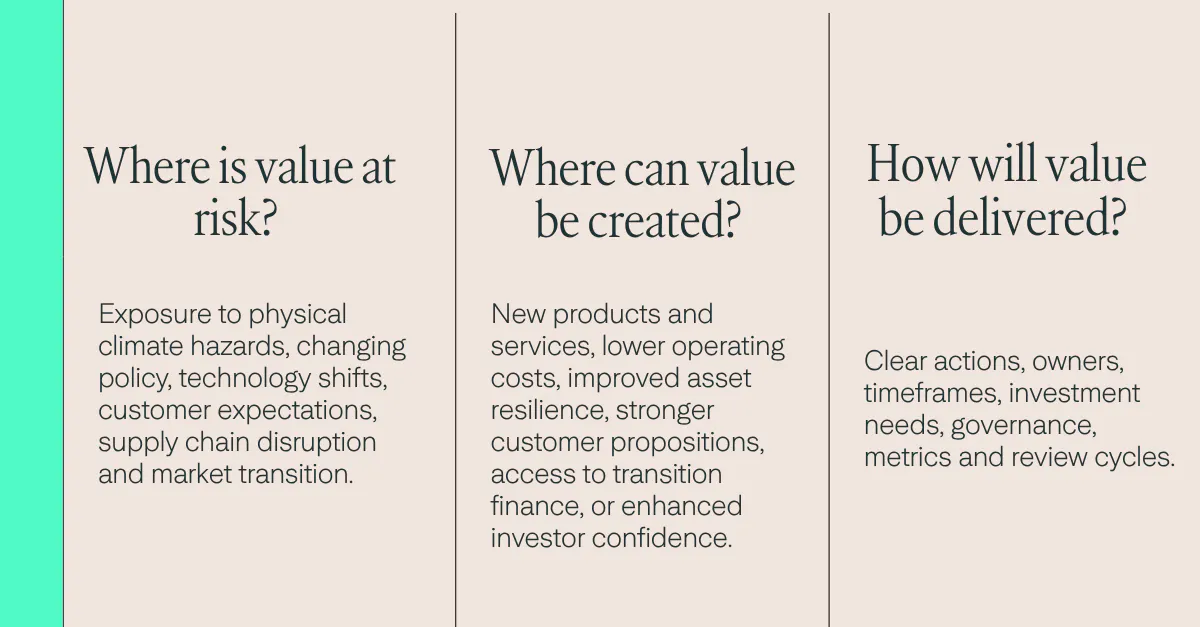
These three questions align closely with the core pillars of credible transition planning: ambition, action and accountability
Ambition: Defines where the organisation is heading and how this aligns with its business model, value chain and long-term strategy.
Action: Sets out the practical steps to reduce emissions, build resilience, manage climate-related risks and pursue opportunities.
Accountability: Ensures responsibilities are clear, progress is monitored, and the plan remains connected to business performance.
Not every business needs the same plan
Some organisations need a foundational plan that clarifies ambition and priority actions. Others need a business-integrated plan that links climate priorities to strategy, risk management and capital planning. Climate leaders may require detailed transition pathways, investment roadmaps, value chain engagement, financial analysis and assurance-ready documentation.
The most effective transition plans are practical, commercially grounded and proportionate to the organisation's maturity. They support AASB S2 disclosure, but they are not simply disclosure documents they are tools for better strategy, stronger governance and more confident investment decisions.
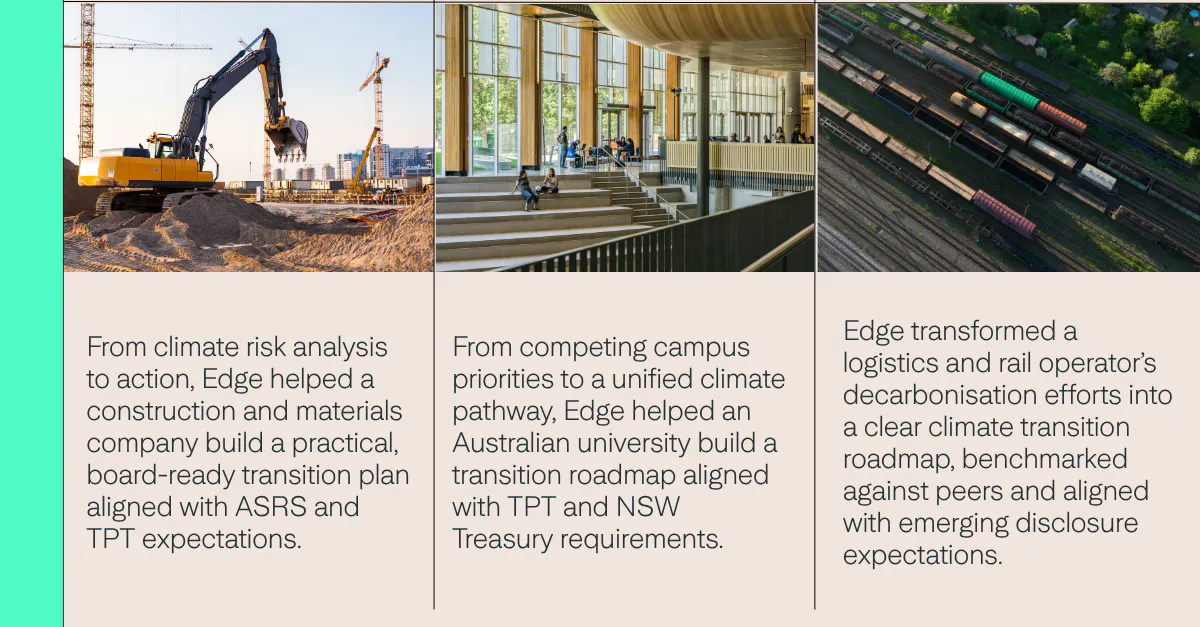
From universities to infrastructure and industry, Edge helps organisations build actionable transition pathways that connect strategy, decarbonisation and disclosure readiness.
Ready to move from climate reporting to value creation?
Edge Impact helps organisations move from climate reporting to value creation.
We bring together climate risk, decarbonisation, resilience, governance, strategy and disclosure expertise to develop transition plans that are credible, actionable and aligned with business priorities.
The Transition Plan Taskforce (TPT) Disclosure Framework is widely recognised as leading practice for transparent, robust and decision-useful transition plan disclosures.
Download the TPT Checklist Below.
Ready to see where your organisation stands?
Book a complimentary transition plan readiness assessment here